

BLOG DETAILS

Brijesh M
Can Watching Movies Boost a Designer's Creativity?
The Surprising Link Between Cinema and Design Thinking
Creativity rarely strikes in front of a blank canvas or under tight deadlines. For designers—whether in UI/UX, branding, motion, or visual design—the spark often comes from the most unexpected places. One of the most powerful yet underrated sources of creative inspiration? Movies.
Far beyond entertainment, films are immersive, multi-sensory experiences. They stimulate the brain visually, emotionally, and intellectually—activating areas responsible for memory, emotion, and pattern recognition. Neuroscience shows that creativity thrives on rich input. If your daily visual diet only includes design platforms and deadlines, you're limiting the material your mind can remix into original ideas.
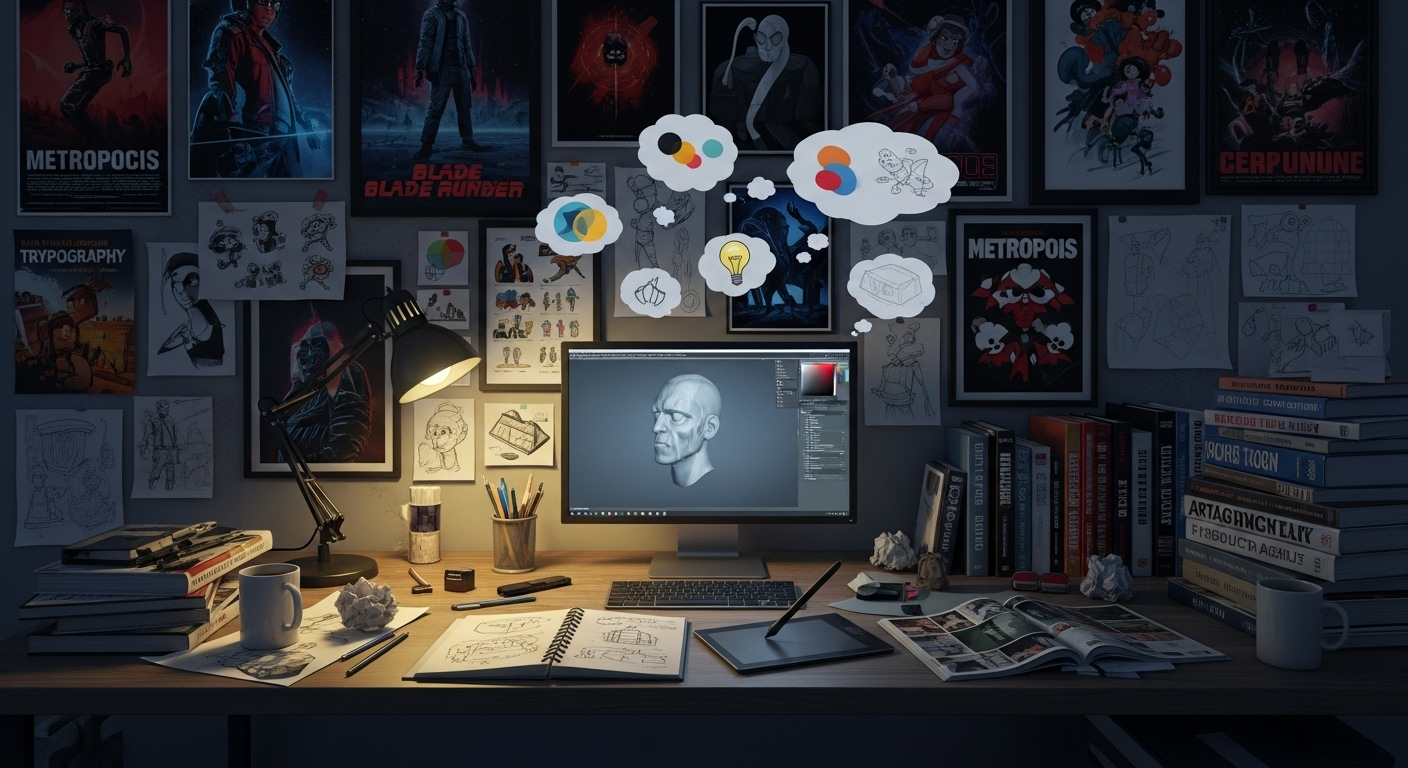
Movies provide a full spectrum of inspiration: color theory, composition, narrative flow, lighting, even sound design. Directors use visual storytelling to communicate themes and emotions—just as a designer does. A frame from Her can teach you about warm palettes and emotional tone. A sequence from Blade Runner 2049 may inspire UI layouts or interface aesthetics. A Wes Anderson film? It's a masterclass in symmetry, space, and visual character.
But movies don't just fuel design—they shape empathy. Great films immerse you in other people's lives, cultures, and perspectives. This emotional depth translates into better, more human-centered design. A designer who watches films attentively learns to understand rhythm, timing, and visual hierarchy—not just through artboards, but through storytelling arcs.
Storytelling, in fact, is one of the biggest takeaways. Designs that connect emotionally—whether it's a logo, website, or ad—almost always follow a narrative structure. There's a character (the user), a conflict (the pain point), and a resolution (the design solution). Good movies teach this instinctively.
The trick isn't just in watching movies—but watching them like a designer. Observe the lighting, the typography, the visual pacing. Pause scenes that make you feel something. Screenshot frames that feel 'designed'. Turn title sequences into motion graphics studies. Collect inspirations, reflect on genre styles, and build a visual journal.
Whether it's The Grand Budapest Hotel for its saturated palettes and layouts, Interstellar for motion interface design, or Spirited Away for whimsical world-building, each film expands your creative vocabulary. Even documentaries like Helvetica remind us that design is more than decoration—it's philosophy, expression, and culture.
Designers are, in many ways, visual storytellers. And films are some of the most powerful stories ever told through visuals. So next time you hit a creative block, try watching a film—not to escape your work, but to evolve it.